
Rope Work and Responsibility
The ClimbThis flow traces the breakdown of expectations about who would fix the summit route and how that failure creates delays and risk.
increasing Bearing strength in each event
 decreasing
Bearing strength in each eventdecreasingAn Expected Arrangement
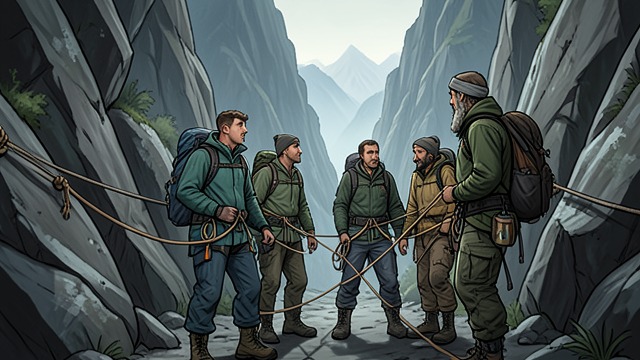
An Expected Arrangement
Advance Work
Clients believe Sherpas will leave ahead and fix ropes before the summit group reaches exposed sections.
Shared Assumption
The teams rely on one another’s workers and on reports that the route may already be prepared.
No Early Departure
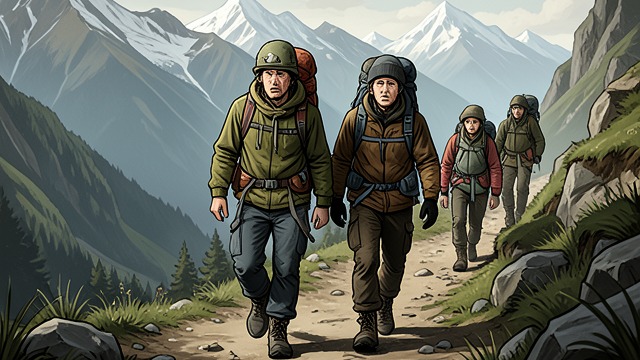
No Early Departure
Plan Changes
Lopsang Jangbu Sherpa leaves with clients rather than departing early to fix the route; he is also ill.
Unrecognized Failure
Other climbers do not learn clearly that the expected preparation has not happened.
The Bottleneck
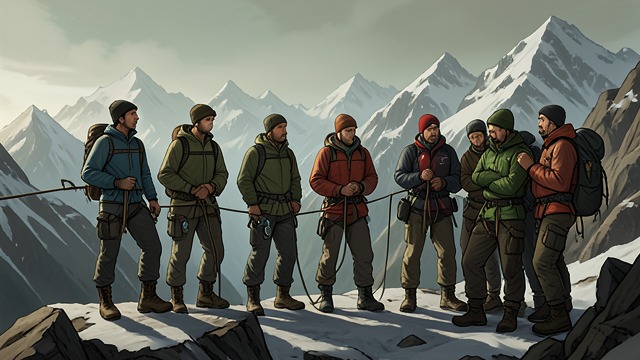
The Bottleneck
Clients Wait
At high exposed sections, climbers encounter missing or inadequate rope and slow down while leaders improvise.
Delayed Schedule
The lost time increases oxygen use and pushes the summit arrivals into the afternoon.
Improvised Fixing
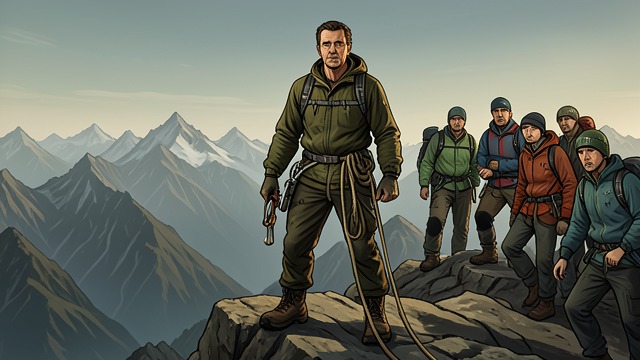
Improvised Fixing
Guides Take Over
Neal Beidleman and Anatoli Boukreev help fix sections of rope while climbers gather behind them.
Incomplete Protection
Some route remains exposed, and the improvised work consumes time and energy that climbers need for descent.
Accountability Afterward
Accountability Afterward
Conflicting Memories
The debriefing reveals disagreement over who was responsible for rope fixing and what each climber had been told.
Broader Failure
The problem is not merely an individual omission; it reflects unclear roles and weak communication among expeditions sharing a route.
before midnight on May 9, 1996
midnight of May 9–10, 1996
morning of May 10, 1996
late morning to early afternoon of May 10, 1996
May 15, 1996, and later
